Antibody Information
General Information for Lipoproteins and Apolipoproteins
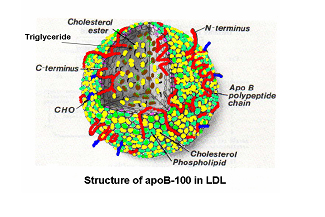
Plasma lipoproteins classes can be defined according to the densities at which they are isolated, as high (HDL), low (LDL), intermediate (IDL), very low-density lipoproteins (VLDL), and the chylomicrons. In general, lipoprotein particles range in size from 10 to 1000 nm. They are composed of a hydrophobic core containing cholesteryl esters, triglycerides, fatty acids and fat-soluble vitamins. The surrounding hydrophilic layer is composed of various apolipoproteins, phospholipids and cholesterol. HDL contains several types of apolipoproteins including apoAI,II & IV, apoCI, II & III, apoD and apoE. LDL contains the apolipoprotein apoB100. VLDL contains several types of apolipoproteins including apoB100, apoCI, II & III and apoE. Chylomicrons contain several types of apolipoproteins including apoAI,II & IV, apoB48, apoCI, II & III, apoE and apoH. Apolipoproteins can be isolated by delipidation, and a number of preparative methods, such as gel filtration or DEAE chromatography.
- Apolipoprotein AI (ApoAI), ApoAI comprises approximately 70% of the protein moiety in HDL. It is a single polypeptide chain consisting of 223 amino acid residues without disulfide bound and with glutamic acid as the C-terminal residue and aspartic acid as the N-terminal residue. The molecular weight is reported to be 28 kDa (Brewer et al., 1978). ApoAI activates lecithin-cholesterol (LCAT) acyltransferase, which is responsible for cholesterol esterification in plasma. ApoAI levels may be inversely related to the risk of coronary disease.
- Apolipoprotein AII (ApoAII), ApoAII comprises 25% of ApoAI in HDL. It exists in human plasma as a dimer of 2 identical chains of 77 amino acid residues, joined by disulfide. The molecular weight is reported to be 8.7 kDa for a single chain (Brewer et al., 1972). The physiological significance of apoAII is unknown.
- Apolipoprotein B (ApoB), ApoB exists in human plasma in two isoforms, ApoB48 (Chen et al., 1987) and ApoB100 (Yang et al., 1986; 1989; Chen et al., 1986; Yang and Pownall 1992). ApoB100 is the major physiological ligand for the LDL receptor. ApoB100 is a large monomeric protein, containing 4536 amino acids (Mwt 515 KDa). ApoB100 is synthesized in the liver and is required for the assembly of VLDL. It is found in IDL and LDL after the removal of the ApoA, E and C. ApoB48 is present in chylomicrons and their remnants. It is essential for the intestinal absorption of dietary lipids. ApoB levels correlate with the risk of coronary disease. ApoB48 is synthesized in the small intestine. It comprises approximately half of the N-terminal region of ApoB100 and is the result of posttranscriptional mRNA editing by a stop codon in the intestine not found in the liver.
- Apolipoprotein CI (ApoCI), ApoCI contains 55 amino acid residues and the Mwt is 6,6 KDa (Jackson et al., 1974). ApoCI has been found to activate LCAT.
- Apolipoprotein CII (ApoCII), ApoCII contains 78 amino acid residues. The Mwt is 8,5 KDa (Jackson et al., 1977). ApoCII activates lipoprotein lipase that hydrolyzes fatty acids from triacylglycerols in chylomicrons.
- Apolipoprotein CIII (ApoCIII), ApoCIII contains 79 amino acid residues. The Mwt is 8,7 KDa (Brewer et al., 1974). It may inhibit the activation of lipoprotein lipase by ApoCII.
- Apolipoprotein E (ApoE), ApoE contains 299 amino acid residues. It is a 34-37 kDa glycosylated protein (Rall et al., 1983). ApoE is involved with triglyceride, phospholipid, cholesteryl ester, and cholesterol transport in and out of cells and is a ligand for LDL receptors. ApoE has also been implicated in immune and nerve degeneration. It has been found to suppress lymphocyte proliferation. Late-onset familial and sporadic Alzheimer disease patients have been found to have a higher occurrence of one of the three common ApoE isoforms, ApoE4. The ApoE4 isoform has been detected in senile plaques and neurofibrillary tangles of Alzheimer disease patients. ApoE4 is associated with rapid chylomicron-remnant clearance and increased total cholesterol levels.
- Apolipoprotein (a) [apo (a)], The plasma concentration of human lipoprotein[a], Lp[a], is highly correlated with coronary artery disease. The protein moiety of Lp[a], apoLp[a], consists of two apoproteins, apo[a] and apoB-100, linked by one or more disulfide bonds(s). Apo[a], the protein unique to Lp[a], exists in polymorphic forms that exhibit different apparent molecular weights (Mr) ranging from 419 kD to 838 kD (Gaubatz et al., 1983; 1990).
- Plasminogen, Plasminogen contains 790 amino acid residues. It is a single chain glycoprotein with MWt 90 kDa (Robbins et al., 1967), soluble in water; prepared from plasma that has been shown by certified test to be negative for HBsAg and for antibodies to HIV and HCV. Plasminogen is the inactive precursor of the protease plasmin. Plasminogen is activated by the action of either tissue plasminogen activator (tPA), which primarily activates the fibrinolytic (thrombolytic) activity of plasmin, or urokinase plasminogen activator (uPA), which is associated with extracellular matrix remodeling and cell migration.
References:
- Brewer HB Jr, Lux SE, Ronan R, John KM. Amino acid sequence of human apoLp-Gln-II (apoA-II), an apolipoprotein isolated from the high-density lipoprotein complex. Proc Natl Acad Sci U S A. 1972 May;69(5):1304-8.
- Brewer HB Jr, Shulman R, Herbert P, Ronan R, Wehrly K. The complete amino acid sequence of alanine apolipoprotein (apoC-3), and apolipoprotein from human plasma very low density lipoproteins. J Biol Chem. 1974 Aug 10;249(15):4975-84.
- Brewer HB Jr, Fairwell T, LaRue A, Ronan R, Houser A, Bronzert TJ. The amino acid sequence of human APOA-I, an apolipoprotein isolated from high density lipoproteins. Biochem Biophys Res Commun. 1978 Feb 14;80(3):623-30.
- Chen, S.H.; Yang, C.Y.; Chen, P.F.; Setzer, D.; Tanimura, M.; Li, W.H.; Gotto, A.M., Jr.; and Chan, L. The Complete cDNA and Amino Acid Sequence of Human Apolipoprotein B-100. J. Biol. Chem. 261, 12918-12921 (1986).
- Chen, S.H.; Habib, G.; Yang, C.Y.; Gu, Z.-W.; Lee, B.R.; Weng, S.-A.; Silberman, S.R.; Cai, S.-J.; Deslypere, J. P.; Rosseneu, M.; Gotto, A.M., Jr.; Li, W.-H.; and Chan L. Apolipoprotein B-48 is the Product of an mRNA with an Organ-Specific In-frame Stop Codon. Science, 238, 363-366 (1987).
- Gaubatz JW, Heideman C, Gotto AM Jr, Morrisett JD, Dahlen GH. Human plasma lipoprotein [a]. Structural properties. J Biol Chem. 1983 Apr 10;258(7):4582-9.
- Gaubatz JW, Ghanem KI, Guevara J Jr, Nava ML, Patsch W, Morrisett JD. Polymorphic forms of human apolipoprotein[a]: inheritance and relationship of their molecular weights to plasma levels of lipoprotein[a]. J Lipid Res. 1990 Apr;31(4):603-13.
- Jackson RL, Sparrow JT, Baker HN, Morrisett JD, Taunton OD, Gotto AM Jr. The primary structure of apolopoprotein-serine. J Biol Chem. 1974 Aug 25;249(16):5308-13.
- Jackson RL, Baker HN, Gilliam EB, Gotto AM Jr. Primary structure of very low density apolipoprotein C-II of human plasma. Proc Natl Acad Sci U S A. 1977 May;74(5):1942-5.
- Rall SC Jr, Weisgraber KH, Innerarity TL, Bersot TP, Mahley RW, Blum CB. Identification of a new structural variant of human apolipoprotein E, E2(Lys146 leads to Gln), in a type III hyperlipoproteinemic subject with the E3/2 phenotype. J Clin Invest. 1983 Oct;72(4):1288-97.
- Robbins KC, Summaria L, Hsieh B, Shah RJ. The peptide chains of human plasmin. Mechanism of activation of human plasminogen to plasmin. J Biol Chem. 1967 May 25;242(10):2333-42.
- Yang, C.Y.; Chen, S.H.; Gianturco, S.H.; Bradley, W.A.; Sparrow, J.T.; Tanimura, M.; Li, W.H.; Sparrow, D.A.; DeLoof, H.; Rosseneu, M.; Lee, F.S.; Gu, Z.W.; Gotto, A.M., Jr.; and Chan, L. Sequence, Structure and Receptor-binding Domains of Human Apolipoprotein B-100. Nature 323, 738-742 (1986).
- Yang, C.Y.; Gu, Z.W.; Weng, S.A.; Kim, T.W.; Chen, S.H.; Pownall, H.J.; Sharp, P.M.; Liu, S.W.; Li, W.H.; Gotto, A.M., Jr.; and Chan, L. Structure of apolipoprotein B-100 of Human Low Density Lipoproteins. Arterio¬sclerosis 9, 96-108 (1989).
- Yang, C.Y. and Pownall, H.J. Structure and function of apolipoprotein B. In Structure and Function of Plasma Apolipoproteins. (M. Rosseneu, Ed.), CRC Press, Inc. 63-84 (1992)
Information for Lipoprotein Oxidation and Atherosclerosis
Atherosclerosis is the leading cause of death in the United States, resulting in approximately 500,000 deaths annually. This disease causes significant morbidity, and the associated economic costs have been estimated at $60 billion a year. A large and growing body of evidence implicates the oxidation of low-density lipoproteins (LDLs) in the initiation of atherogenesis. Diabetes mellitus is a chronic disease characterized by abnormal sugar, fat, and protein metabolism. These abnormalities cause the development of atherosclerotic disease, sometimes called hardening of the arteries. Nearly 80% of people with diabetes suffer with heart disease, which is the leading cause of death in diabetics. Low-Density Lipoproteins, LDL or “bad cholesterol” seems to be involved in the development of atherosclerosis. Thus, diabetes is a strong, independent risk factor for atherosclerosis, the major cause of morbidity and mortality in patients with diabetes. To serve our customers to study in the field of oxidation related diseases, we are proud to offer the following oxidatively modified reagent and antibodies.
- Cu2+ oxidized LDL: The oxidation of LDL is accelerated significantly by metal ions and is inhibited by chelating agents. Cu2+ oxidized LDL exhibited chemical and biological properties similar (Yang et al., 1999; Steinbrecher, U.P. 1987). LDL oxidized or otherwise modified in vitro, including Cu-Ox-LDL and MM-LDL and lysophosphatidylcholine, a major lipid component of oxidized LDL, increase the expression of cell adhesion molecules on endothelial cells, which support the adhesion of monocytes and lymphocytes (Kume et al., 1992; Khan et al., 1995; Shih et al., 1999).
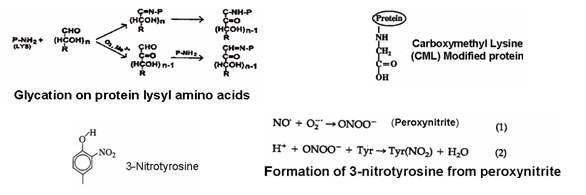
- Anti-nitrotyrosine antibodies: Peroxynitrite (ONOO-) is a powerful oxidant, and nitrating species are formed by the reaction of nitric oxide with superoxide (Beckman et al., 1992). Peroxynitrite is a relatively selective oxidant and modifies tyrosine either in the free or the protein-bound form to create nitrotyrosines, leaving detectable footprints of oxidation in vivo (Beckman et al., 1994). Antibodies raised against nitrotyrosine can be used to detect the existence of nitrotyrosine in tissues.
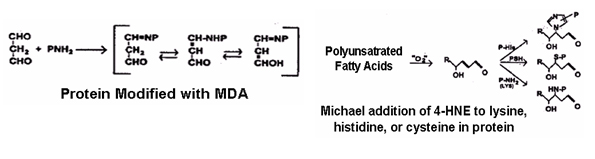
- Anti-Malondialdehyde (anti-MDA) antibodies: An elevated plasma level of atherogenic MDA-LDL is a marker for unstable atherosclerotic cardiovascular disease. MDA antibody can be used to detect the existence of MDA modified LDL in circulating system (Yang et al. 2003; Berlett and Stadtman 1997).
- Anti-Hydroxynonenal (anti-HNE) antibodies: Modifications on lysine residues, with formation of carboxylmethyllysine (CML), malondialdehyde (MDA) and hexito-lysine are advanced glycation end-products (AGE), and the coupling with reactive aldehyde compounds, such as 4-hydroxynonenal (4-HNE) may appear from lipid oxidation (Guichardant et al., 1998). These modifications feature the oxidative byproducts which react with NH2 groups and form Schiff-base adducts. LDL treated with HNE or oxidatively modified by Cu++ or by cultured endothelial cells give rise to Michael addition-type HNE adducts that are recognized by HNE-specific antibodies.
- Anti-Carboxymethyl (anti-CML) antibodies: The initial step in AGE formation is the nonenzymatic attachment of sugar aldehydes or ketones to the side chains of lysine, arginine, and possibly histidine (Vlassara et al., 1994). The lysine ï?¥-amino-derived glycation product, or Schiff base, rearranges to form a more stable amino ketone intermediate known as the Amadori product. The presence of the Amadori product (Nagai et al., 1997), indicative of active glycation, can be demonstrated by its reduction to a stable epimeric mixture of 1-glycitol-lysine and 1-mannitol-lysine, known collectively as hexitol-lysine (HL). Immunocytochemical and biochemical studies have suggested that one particular AGE, Nï?¥-(Carboxymethyl)lysine (CML) is the major AGE that accumulates in vivo (Ikeda et al., 1996; Schleicher et al. 1997). Elevated serum levels of CML are detected in patients with diabetes mellitus (Schleicher et al., 1997) and CML is increased in the vascular tissues of diabetic rodents and humans (Kume et al., 1995; Meng et al., 1998).
- Beckman JS. Ye YZ. Anderson PG. Chen J. Accavitti MA. Tarpey MM. White CR. Extensive nitration of protein tyrosines in human atherosclerosis detected by immunohistochemistry. Biological Chemistry Hoppe-Seyler. 375(2):81-8, 1994
- Beckman JS. Ischiropoulos H. Zhu L. van der Woerd M. Smith C. Chen J. Harrison J. Martin JC. Tsai M. Kinetics of superoxide dismutase- and iron-catalyzed nitration of phenolics by peroxynitrite. Archives of Biochemistry & Biophysics. 298(2):438-45, 1992.
- Berlett BS, Stadtman ER. Protein oxidation in aging, disease, and oxidative stress. J Biol Chem. 1997 Aug 15;272(33):20313-6.
- Guichardant M, Taibi-Tronche P, Fay LB, Lagarde M. Covalent modifications of aminophospholipids by 4-hydroxynonenal. Free Radic Biol Med. 1998 Dec;25(9):1049-56.
- Ikeda K., T. Higashi, H. Sano, Y. Jinnouchi, M. Yoshida, T. Araki, S. Ueda and S. Horiuchi, N -(carboxymethyl)lysine protein adduct is a major immunological epitope in proteins modified with advanced glycation end products of the Maillard reaction. Biochemistry 35 (1996), pp. 8075¯8083.
- Khan BV, Parthasarathy SS, Alexander RW, Medford RM. Modified low density lipoprotein and its constituents augment cytokine-activated vascular cell adhesion molecule-1 gene expression in human vascular endothelial cells. J Clin Invest. 1995 Mar;95(3):1262-70.
- Kume N, Cybulsky MI, Gimbrone MA Jr. Lysophosphatidylcholine, a component of atherogenic lipoproteins, induces mononuclear leukocyte adhesion molecules in cultured human and rabbit arterial endothelial cells. J Clin Invest. 1992 Sep;90(3):1138-44.
- Kume S, Takeya M, Mori T, Araki N, Suzuki H, Horiuchi S, Kodama T, Miyauchi Y, Takahashi K. Immunohistochemical and ultrastructural detection of advanced glycation end products in atherosclerotic lesions of human aorta with a novel specific monoclonal antibody. Am J Pathol. 1995 Sep;147(3):654-67.
- Meng J, Sakata N, Takebayashi S, Asano T, Futata T, Nagai R, Ikeda K, Horiuchi S, Myint T, Taniguchi N. Glycoxidation in aortic collagen from STZ-induced diabetic rats and its relevance to vascular damage. Atherosclerosis. 1998 Feb;136(2):355-65.
- Nagai R, Ikeda K, Higashi T, Sano H, Jinnouchi Y, Araki T, Horiuchi S. Hydroxyl radical mediates N epsilon-(carboxymethyl)lysine formation from Amadori product. Biochem Biophys Res Commun. 1997 May 8;234(1):167-72.
- Vlassara H, Bucala R, Striker L. Pathogenic effects of advanced glycosylation: biochemical, biologic, and clinical implications for diabetes and aging. Lab Invest. 1994 Feb;70(2):138-51.
- Schleicher E.D., E. Wagner and A.G. Nerlich, Increased accumulation of the glycoxidation product N -(carboxymethyl)lysine in human tissues in diabetes and aging. J. Clin. Invest. 99 (1997), pp. 457¯468.
- Shih PT, Elices MJ, Fang ZT, Ugarova TP, Strahl D, Territo MC, Frank JS, Kovach NL, Cabanas C, Berliner JA, Vora DK. Minimally modified low-density lipoprotein induces monocyte adhesion to endothelial connecting segment-1 by activating beta1 integrin. J Clin Invest. 1999 Mar;103(5):613-25.
- Steinbrecher, U.P. (1987) Oxidation of human low-density lipoprotein results in derivatization of lysine residues of apolipoprotein B by lipid peroxide decomposition products. J. Biol. Chem. 262: 3603-3608.
- Yang CY, Gu ZW, Yang M, Lin SN, Siuzdak G, and Smith CV, Identification of modified tryptophan residues in apoB-100 derived from copper ion oxidized LDL, Biochemistry, 1999, 38, 15903-15908.
- Yang CY, Raya JL, Chen H, Chen CH, Abe Y, Pownall HJ, Taylor AA and Smith CV, Isolation, Characterization and Cytotoxic Effects of Circulating Oxidatively Modified Low-Density Lipoproteins, ATVB 2003; 23 (6), 1083-1090.